What a Great Solar Installation Company Does Differently
Behind every rooftop system that performs flawlessly for a quarter of a century sits a solar installation company that did the unglamorous work correctly, from the wind-load calculation to the final torque on every clamp. In 2026, as solar adoption across Pakistan accelerates, the gap between a professional installer and a weekend crew has never been wider or more consequential. This article pulls back the curtain on what genuine installation excellence actually looks like, so you can recognize it before you sign.
Think of it as a site walk-through with an experienced engineer, narrating what should happen at each stage and what quietly goes wrong when corners are cut.
Stage One: The Survey That Sets Everything Up
A competent solar installation company never quotes a full system from a phone call. The first visit is a proper survey: measuring usable roof area, checking orientation and shading across the day, inspecting the roof structure, and reviewing your electrical panel and metering setup.
This is where a good installer earns trust. They will point out a chimney shadow that would sabotage two panels, or note that your distribution board needs an upgrade before a hybrid inverter can be added. Skipping this stage is the root cause of most underperforming systems.
Stage Two: Engineering the Design
Design is more than counting panels. It covers string layout to balance the inverter, cable sizing to minimize losses, DC and AC protection, earthing, and a mounting structure rated for local wind speeds. In coastal cities the wind and salt considerations differ sharply from inland plateaus, so the design must reflect the site.
| Design element | Done right | Common shortcut |
|---|---|---|
| Mounting | Galvanized/aluminum, wind-rated | Thin, un-treated steel |
| Cabling | Correctly sized, UV-rated DC cable | Undersized, exposed cable |
| Earthing | Proper earth pit and bonding | Token or missing earthing |
| Inverter siting | Ventilated, shaded, accessible | Direct sun, poor airflow |
How Do You Judge Installation Quality on the Roof?
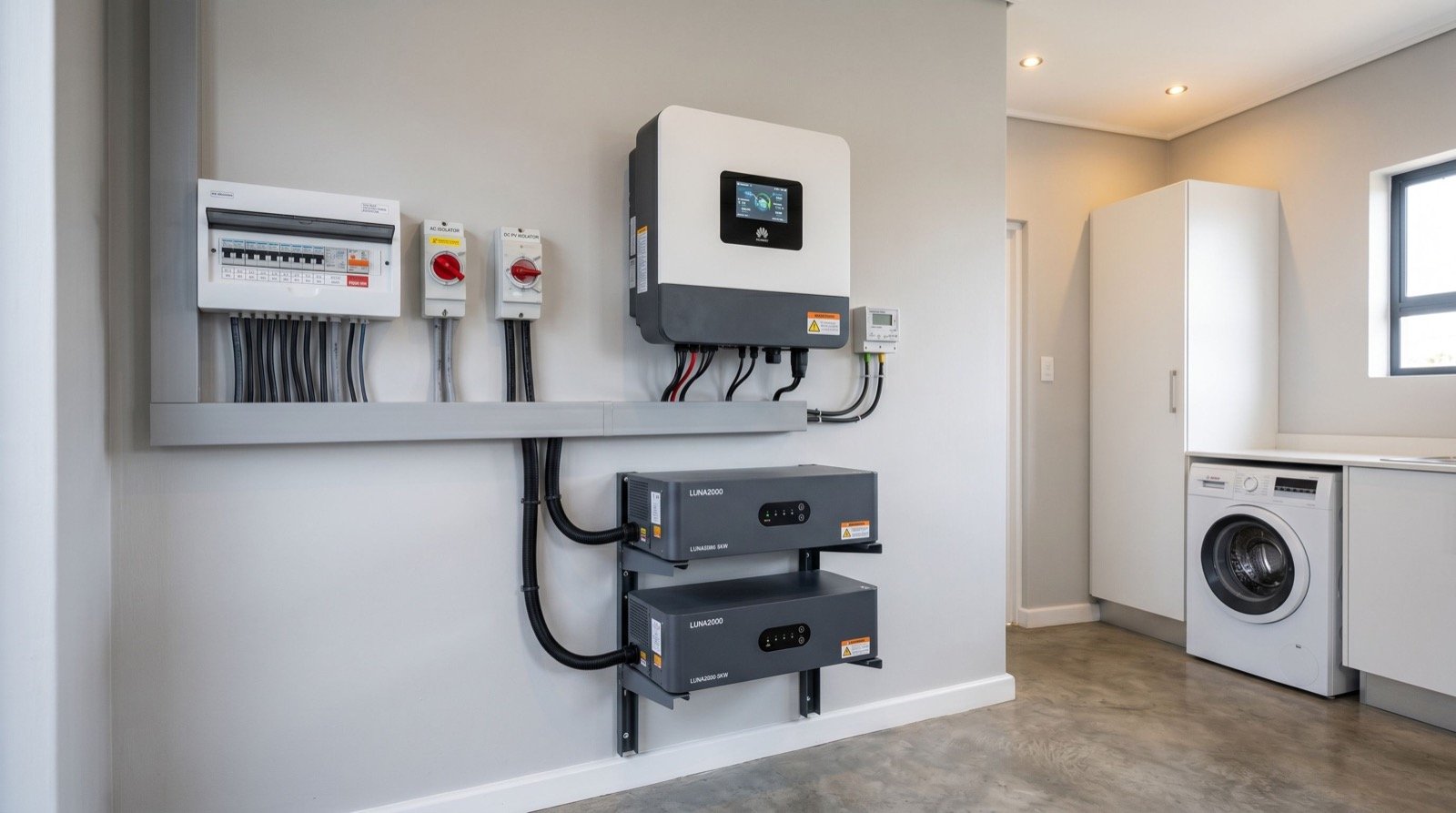
You do not need to be an electrician to spot good workmanship. On a quality install, cables are neatly clipped and run in conduit, not draped loosely across hot tiles. Panels sit level with even gaps, mounting rails are properly anchored, and the inverter is mounted in a shaded, ventilated spot rather than baking in direct sun.
- Tidy, protected cable runs with no exposed conductors.
- Uniform panel spacing and a ventilation gap beneath the array.
- Labeled DC and AC isolators for safe shutdown.
- A clean, accessible inverter with visible monitoring.
These details are not cosmetic. Loose cabling degrades in the sun, poor ventilation shortens inverter life, and missing isolators are a genuine safety hazard.
Stage Three: Net Metering and Commissioning
A full-service solar installation company does not consider the job done when the panels are bolted down. Commissioning includes testing every string, verifying inverter output, and completing the net-metering application so your surplus daytime generation offsets your grid usage.
The net-metering framework is set nationally, and the technical standards are worth understanding. Independent, authoritative guidance from bodies like the National Renewable Energy Laboratory underscores why proper commissioning and grid interconnection practices matter for long-term system safety and yield. A serious installer handles the local application end to end.
Stage Four: The Handover and After-Sales
Good installers leave you with documentation: warranty certificates, a wiring diagram, inverter monitoring login, and a maintenance schedule. They explain how to read your generation data so you can spot a problem early.
Crucially, they remain reachable. A solar array is a 25-year relationship, and the companies worth choosing build service into their model rather than vanishing after commissioning.
Choosing the Right Installer for Your City
Location shapes the whole project, from wind-load design to which distribution company processes your net metering. When selecting a solar installation company, favor one with proven experience in your specific grid area and climate zone.
Coastal projects are a clear example. Buyers evaluating solar panels in Karachi need installers who design for salt-laden air and high humidity with corrosion-resistant mounting and sealed connections, which an inland-only crew may overlook.
For property owners and investors, engaging trusted professionals protects both performance and resale value, because a documented, warranty-backed install is a genuine asset while a rushed one is a liability.
Frequently Asked Questions
How long does a solar installation take?
A typical home system is physically installed in one to three days after the survey and design. Net-metering approval and meter installation can add a few weeks depending on your distribution company.
What should a solar installation company provide at handover?
Warranty certificates, a wiring diagram, inverter monitoring access, a maintenance schedule, and completed net-metering documentation. Anything less is incomplete.
Can I install solar myself to save money?
It is strongly discouraged. Improper DC wiring and mounting create fire and structural risks, and a self-install voids net metering and most warranties. Professional installation protects both safety and your investment.
How do I know the installation was done correctly?
Look for tidy conduit-run cabling, level panels with ventilation gaps, labeled isolators, a shaded inverter, and full commissioning test results in your handover pack.
Warning Signs of a Weak Installation Crew
Recognizing trouble early can save you years of underperformance. Some warning signs appear before the work even starts, others during installation. Watching for them lets you intervene while you still have leverage.
- No survey. A quote issued over the phone with no roof visit is a red flag.
- Vague quote. Lump-sum pricing with no named components hides cheap hardware.
- Rushing the roof. A crew skipping earthing, conduit, or level mounting to finish fast is storing up failures.
- No commissioning report. If they cannot show string test results, the system was never properly verified.
- No handover pack. Missing warranties and wiring diagrams leave you stranded at service time.
The Role of Ongoing Maintenance
Installation quality sets the ceiling for performance, but maintenance determines how close you stay to it over the years. A professional solar installation company will explain a simple upkeep routine and, ideally, offer to handle it: periodic panel cleaning to clear dust and bird droppings, inverter firmware checks, and an annual inspection of cabling, connectors, and mounting bolts.
These tasks are minor individually, but neglected they compound. Dust alone can shave output noticeably in dry, dusty regions, and a loose connector left unchecked can escalate into an inverter fault. The best installers treat maintenance as part of the relationship, not an afterthought, because a well-maintained system reflects well on their name.
Getting Multiple Quotes the Smart Way
Always gather two or three itemized quotes, but compare them intelligently. Line up the panel models, inverter ratings, mounting materials, warranty terms, and net-metering scope side by side. The cheapest headline number frequently corresponds to thinner mounting steel, undersized cable, or a “you handle net metering yourself” clause buried in the fine print. Judged on total value rather than sticker price, the strongest installer often turns out to be competitive after all, and far cheaper over 25 years.
The Takeaway
A great solar installation company distinguishes itself long before the first panel goes up and long after the last one is commissioned. In 2026, choose the installer who surveys thoroughly, engineers deliberately, works cleanly on the roof, owns your net-metering process, and stays reachable for the decades ahead. That discipline, more than any single brand of panel, is what turns a rooftop into a reliable, long-term investment.